Sun is a system poem built on Saros 126, a cycle of 72 solar eclipses running from 1179 to 2459. The number 72 governs everything else.
The core is a grid of ten words: three nouns (apertures, apparitions, auguries), three verbs (align, thicken, emerge) and four adverbs (rhythmically, vertically, recursively, now). Each poem takes one word from each column in one of two orders, noun–verb–adverb or adverb first. 3 × 3 × 4 × 2 = 72. One poem per eclipse.
Around the grid sit three short video sequences, Aperture, Apparition and Augury, each a line sung over a fixed A2 drone; a small widget that plays, draws at random or flips the syntax; and a Prolog version on Github: saros.pl, 72 lines that simply produce the 72 poems, and sun.pl, which also checks itself before printing anything.
apertures / align / rhythmically
apparitions / emerge / recursively
auguries / thicken / vertically
now
Background
The grid is a regularisation of a 2011 poem (interpretants / phases / conscience and so on). There, two plurals stood beside a mass noun, and the vocabulary pointed in three directions. In the new version every column is consistent in word class and number, and the words are narrowed to one phenomenon: something showing itself through an opening.
It took two attempts. The first draft had nine words and claimed 432 variants. On recount, that figure covered reshufflings of the columns, not sentences. The real number was 54, and 54 does not divide into 72. The fourth adverb, now, closed the gap.
The 2011 grid reads:
interpretants / flow / rhythmically
phases / infer / conclusively
conscience / projects / vertically
The 2026 grid reads:
apertures / align / rhythmically
apparitions / emerge / recursively
auguries / thicken / vertically
now
Glossematics
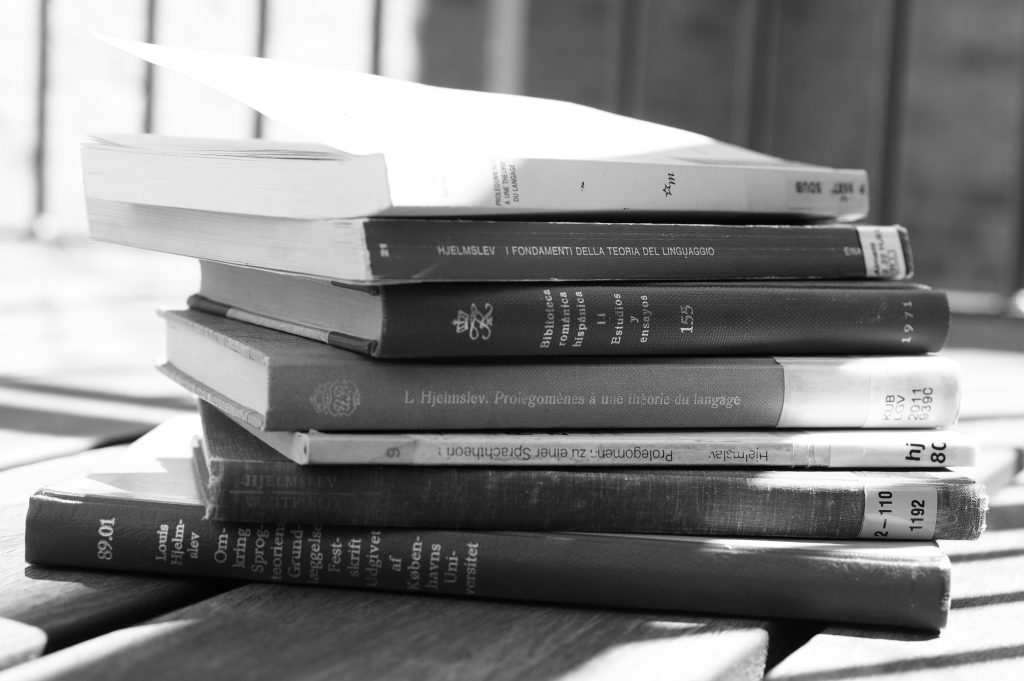
The work rests on Hjelmslev’s Prolegomena to a Theory of Language (1943). Swapping a word within a column is commutation; reversing the order is permutation; together, mutation. The point is that the poem’s content plane is not the dictionary but Saros 126. Because the 72 variants are bound to the 72 eclipses, every substitution moves the reader a fixed distance through the cycle: the adverb one step (18 years), the verb four (72 years), the noun twelve (216 years), the word order 36 (649 years).
Hold the chain constant and commute the noun:
now, apertures emerge – 12 August 2026, total, γ 0.898
now, auguries emerge – 22 December 2242, partial, γ 1.284
now, apparitions emerge – 3 May 2459, partial, γ 1.519
The categories are defined not by grammar but by how far they carry you through time. That is also why the narrowing was necessary rather than merely tidy: had the nouns stood as far apart as in 2011, the eclipse index would have been decoration.
Prolog fits. You don’t give it steps, you state constraints and let it find whatever satisfies them. Its only building block is the relation, which is where Hjelmslev begins too. That Prolog dates from 1972 and grew out of work on natural language in Marseille doesn’t hurt.
Now
Now is the grid’s only deictic word. It refers to nothing but the moment it is spoken. It appears in 18 of the 72 variants, so a quarter of the poems can only be read by someone present; the rest can be read from anywhere.
Now and thicken are also the only Germanic, pre-Norman words. The other eight are Latin or Greek, the register one uses about an eclipse. The two Germanic cells are where the body’s language breaks through the language of measurement, and thicken is deliberately the word Bakhtin’s translators chose for the chronotope: time thickens, takes on flesh.
The Antikythera Mechanism predicted Saros eclipses for one particular place. Sun keeps the cycle and drops the geography. What binds a reading to a here is not latitude but utterance.
Also see: The Time Is Out of Joint
Sound
Each line sounds over an A2 drone at 110 Hz. Every letter selects an overtone by its position in the alphabet modulo 12, weighted by how often it recurs, in the order noun, verb, adverb. The three a-nouns all open on the fundamental. Now (partials 2, 3 and 11) and thicken never touch it, so the two Germanic cells are also the two that leave the drone hanging. The letter l (12 mod 12 = 0) is silence and occurs only in the Latinate words.
Form
The title points to the Byzantine travelling altar, the hinged triptych, and to Howard Russell Butler’s three eclipse paintings of 1918–1925. The page’s own sequence, Mutation / Aperture / Apparition / Augury / Prolegomena, reads as a five-panel polyptych. Hjelmslev’s preface comes last.
Louis Hjelmslev: Prolegomena to a Theory of Language
Archive & Licence
The Prolog code is free to take further under the MIT licence. The project’s archival record, with links to GitHub and Zenodo, is kept in the exergue section.
